The sixth man is one of the most strategically significant roles in the NBA: a player who does not start, yet is “typically tasked with providing instant scoring off the bench while also leading the team’s second unit,” in the words of Yardbarker’s David J. Hunt. But the role is not a single job. It has evolved into a set of distinct archetypes—the instant offense scorer, the defensive stopper, the versatile all-rounder, and the positional specialist—each answering a different tactical question for a team.
John Havlicek: Revolutionizing the Versatile Sixth Man
Legendary Boston Celtics coach Red Auerbach is credited with creating the sixth man role. He first utilized guard Frank Ramsey in this capacity, who, despite being one of the Celtics' best players, felt more comfortable coming off the bench. Auerbach's strategy was to keep his best players fresh and in the lineup at the end of close games. John “Hondo” Havlicek, who succeeded Ramsey, revolutionized the role during his 16-year career. Bleacher Report’s Jay Wierenga notes that Havlicek “is generally considered the original sixth man,” serving as a bridge between two great generations of Boston Celtics basketball. What made Havlicek revolutionary was not merely coming off the bench, but his star-level production: an eight-time NBA champion and 13-time All-Star, he brought defense, clutch shooting, and, in Wierenga’s phrase, “a level of hustle rarely seen in basketball.”
That versatility is the strategic seed of the whole role. A reserve who can score, rebound, defend, pass, and lead does not merely patch a lineup when a starter rests—he changes what the second unit can attempt. Havlicek demonstrated that a championship team could deliberately place a star-quality player among its reserves and become stronger, not weaker, for it. Every later archetype of the sixth man is, in some sense, a narrower distillation of what he did across the board.
Archetypes of Impact: Understanding the Modern Sixth Man
What began as a single coach’s bench decision in Boston has since diversified, because teams do not all need the same thing from their first reserve. A club with a thin bench needs scoring; a contender with plenty of shooting may need a defensive irritant; a veteran roster may need a stabilizer. As Paris Basketball’s glossary of the role puts it, the sixth man is “the spark that reignites the machine when the starting offense falters”—but the shape of that spark varies by team and era.
That variety is why the sixth man cannot be understood as one monolithic position. Sorting notable reserves by their primary on-court contribution reveals at least four recurring strategic functions: momentum-changing scoring, defensive shutdown work, all-around stabilizing, and specialized dominance of one part of the floor. The players who followed Havlicek each built a case that one of these functions, executed at a high level, could be the backbone of a championship roster.
The Instant Offense Scorer: Changing the Game’s Momentum
The most familiar archetype is the reserve whose job is scoring, pure and simple. Paris Basketball calls this the “killer” strain of sixth men, and names Jamal Crawford and Lou Williams as the two who “turned coming off the bench into an ultra-lucrative profession.” Hunt, ranking the greatest sixth men in NBA history, is blunter still: “Jamal Crawford is the greatest sixth man in NBA history”—a judgment, it should be noted, from that source’s list rather than an established fact.
Williams, a 6-foot-1, 175-pound guard, became in Hunt’s account “one of the best little guys in NBA history” precisely because he was “a scoring machine off the bench.” The tactical value here is momentum: a starter’s rest normally means an offensive lull, but an instant-offense reserve converts that lull into pressure on the opponent. Defenses that plan for the starting five must instead absorb a second wave with its own threat, stretching rotation planning well past the opening lineup.
The Defensive Stopper and Versatile All-Rounder
Michael Cooper of the Los Angeles Lakers inverted the convention. Wierenga, writing as a one-time Pistons fan, recalls that Cooper “relished the opportunity to match up with the opponent’s best player, and this made him a unique sixth man. Typically sixth men are known for coming in off the bench and providing instant offense. Cooper came in and shut down the opponents.” He was also, in that fan’s-eye description, “a strong defender, good shooter and smart player”—a reserve deployed as a weapon against the other team’s best scorer.
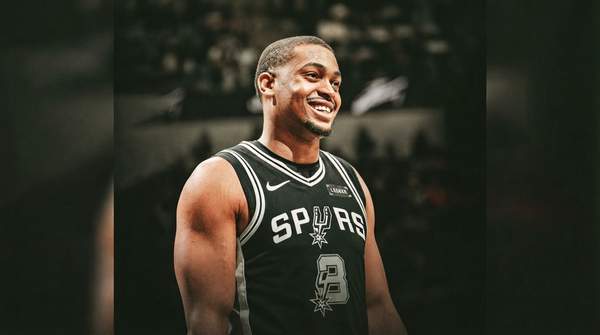
The all-rounder archetype extends Havlicek’s template. Paris Basketball’s glossary holds up Manu Ginóbili of the San Antonio Spurs as “basketball IQ personified” and “the absolute archetype of sacrifice”—an international superstar who, in that account, accepted a bench role under Gregg Popovich to balance the team, and collected four championship rings and a Hall of Fame place in the process. Ginóbili’s case makes the strategic logic explicit: the role can be less about a player’s limitations than about distributing talent across forty-eight minutes.
Sixth Man Archetypes: Strategic Functions and Key Examples
Sorting the evidence by each player’s primary contribution shows how the role divides into distinct tactical functions rather than a single job description:
| Archetype | Core Tactical Function | Key Player Examples |
|---|---|---|
| Instant Offense Scorer | Provides immediate scoring punch off the bench, changing momentum when the starting offense stalls. | Jamal Crawford; Lou Williams, described as “a scoring machine off the bench” in Hunt’s ranking. |
| Defensive Stopper | Enters to guard the opponent’s best player and shut down scorers. | Michael Cooper, who in Wierenga’s account “came in and shut down the opponents.” |
| Versatile All-Rounder | Sparks the team across scoring, rebounding, defense, and playmaking. | John Havlicek, the eight-champion Celtic; Manu Ginóbili, the Spurs guard who accepted a bench role for team balance. |
| Positional Specialist | Dominates one area of the floor, supplying a unique matchup advantage. | Kevin McHale, whose low-post moves, per Hunt, “were out of this world.” |
Read across its rows, the table makes the article’s central point: “sixth man” is a strategic category, not one skill set, and each archetype maps to a different kind of team need—bench scoring, defensive matchups, holistic stabilization, or post dominance.
The Positional Specialist: Kevin McHale’s Dominance
The fourth archetype is the specialist who wins one patch of the court. Kevin McHale is its standard: Hunt notes that the Celtics great “won back-to-back Sixth Man of the Year awards in 1984 and 1985” and was “a key contributor to the Celtics’ three championships in the 80s,” with post moves “out of this world.” McHale’s function was matchup terror—a reserve forward whose low-post scoring and interior defense created problems no opposing bench unit could answer.
His case also shows how the award itself institutionalized the role: the NBA’s Sixth Man of the Year recognition gives a name to reserve excellence, and McHale’s consecutive trophies in the mid-1980s certified the specialist as a legitimate star path rather than a demotion. This analysis focuses on archetypes rather than an exhaustive list of award winners, and the player examples are illustrative rather than a ranking of the “greatest” sixth men beyond the opinions cited.
Recognizing the Evolving Impact of the Sixth Man
Readers should now be able to identify the specific strategic purpose and player archetype of a team’s sixth man, moving beyond a generic understanding of the role. The concrete test: the reader can articulate the distinct tactical contributions of players like Jamal Crawford (scorer) versus Michael Cooper (defender) or John Havlicek (all-rounder) in a basketball game—and can place a player like McHale into his positional-specialist category on sight of his role. Watching any NBA game’s first substitution, ask which of the four functions the incoming player serves: that answer, more than the box score, reveals how his coach intends to win the minutes when the starters rest.
Sources
- The 25 greatest sixth men in NBA history — Yardbarker
- Sixth man - Wikipedia — EN
- Top NBA Sixth Men of All Time — Bleacherreport
- Parisbasketball