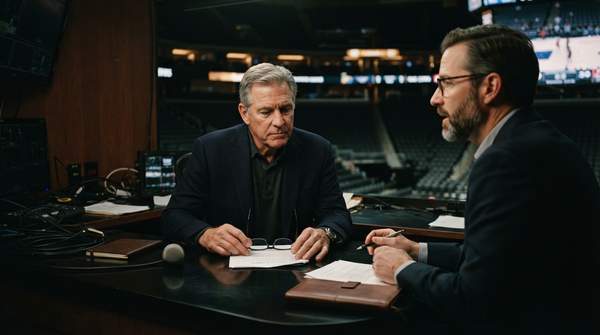
When a star analyst changes networks, the headline usually frames it as personality drama or a simple pay dispute. The better explanation, drawn from the recent situations of Troy Aikman at ESPN and Mike Tomlin at NBC, is a recurring three-factor pattern: a network's brand strategy, the individual's on-air appeal, and the financial and contractual pressures that force decisions to a head. Understanding these three drivers turns scattered "silly season" news into a predictable system.
Introduction: The Dynamics of Sports Broadcasting Talent
The NFL's broadcast booths "are about to change dramatically," as Kendall Baker reported for Yahoo Sports in October 2026, framing the current stretch as a coming silly season for broadcasters. That language captures how the industry itself treats these moves: periodic, high-stakes, and largely opaque to the public. The framework offered here is a synthesis of reported trends and specific cases rather than an officially stated industry model, and it draws only on public reporting—no inside information from networks or agents. Its scope is high-profile talent in major US sports broadcasting, primarily the NFL and NBA, and it applies to moves like Aikman's stalled ESPN negotiations and Tomlin's arrival at NBC's studio desk.