Choosing a youth sports program is less about finding the most competitive team and more about finding the right fit for your child's development, safety, and enjoyment. As Bass Athletics, a youth training organization, frames it, the decision is "a balancing act: what your child needs right now (fun, basics, confidence) and what their goals might be later." The framework below organizes that balance into four factors you can actually observe and compare—coaching philosophy, age-appropriate development, safety, and family fit—so you can evaluate programs on evidence rather than marketing.
Introduction: Beyond Wins and Reputations
Most parents default to the most popular or flashiest program, but reputation is a poor proxy for what your child will experience week to week. The Blue Jackets Hockey League's parent handbook advises that programs and coaches should "coach towards development, not outcome," with an intentional focus on character and life skills. Project Play, the Aspen Institute's youth sports initiative, makes the developmental case even more concrete: most kids lack the neural connections to throw straight before age 6, struggle to strike balls before age 8, and don't jump proficiently until age 10 or 11. A program that ignores these stages isn't just suboptimal—it can set children up to fail at tasks their bodies aren't ready for.
Factor 1: Coaching Philosophy and Methods
The single most revealing question you can ask a program is also the simplest: how many athletes per coach? Bass Athletics flags ignoring coach-to-player ratio and practice design as a common parental mistake, because "lines and chaos kill learning." Watch a practice, not a game—practices reveal instruction quality in a way games don't.
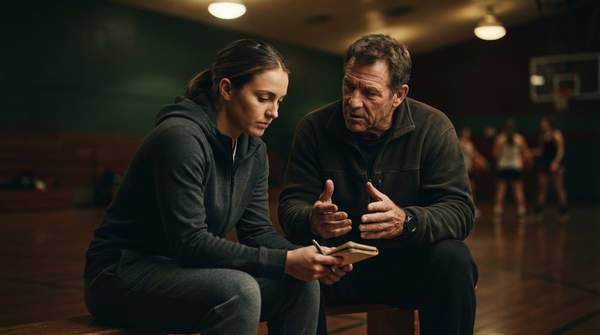
While you observe, look for the behaviors a review of youth sport in the National Library of Medicine's PMC archive identifies as markers of positive coaching: positive reinforcement before, during, and after games and practices; an emphasis on fun over winning; and a focus on skill acquisition rather than skill mastery alone. The Blue Jackets handbook adds that coaches should let kids "make choices, learn life skills, and be more than a hockey player." A coach who praises effort, handles mistakes calmly, and keeps players moving is coaching development; a coach who only reacts to the scoreboard is coaching outcomes.
Factor 2: Age-Appropriate Development
Ask how the program tailors activities to age—not just how it divides teams by birth year. Project Play points to the U.S. Olympic and Paralympic Committee's American Development Model, adopted in 2014, which combines sport, play, education, and health through a five-stage pathway based on a child's growing capacities. Its first principle is a commitment to fun, as kids define it at each age level.
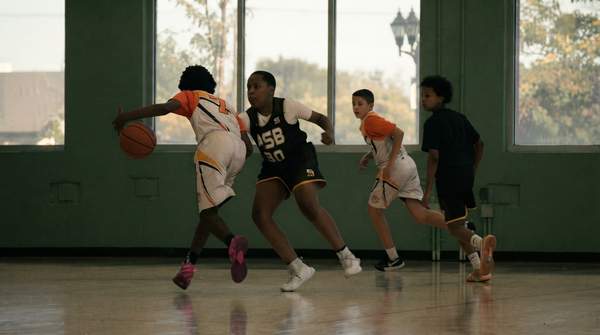
Concretely, look for small group sizes, patient instruction, and movement-based games for younger children—Bass Athletics describes this as a "comfort-first" approach for a shy five- or six-year-old, with high-fives, simple roles, and short explanations. The developmental research Project Play cites suggests a program that expects six-year-olds to throw accurately or eight-year-olds to strike balls consistently is measuring children against milestones most of them cannot yet reach. A better measure of success, Project Play argues, is personal improvement.
Factor 3: Safety and Health Protocols
Safety is where vague marketing language should give way to specific answers. US Sports Camps, which places more than 175,000 young athletes each summer, says the right program is one "that can answer your safety questions clearly." Ask what safety education its coaches receive, what equipment is provided or required, and what procedures exist for injuries—including heat illness and concussion recognition, both of which appear in the PMC review's proposed safety standards alongside pre-participation physicals and proper hydration and clothing.
If a program can't articulate who responds to an injury, what training that person has, and what rules govern return to play, treat that as a data point in your comparison. The absence of a clear answer is itself observable evidence about the program's priorities.
Factor 4: Family and Child Fit
Fit is the factor parents most often skip, and it's the one that determines whether a child stays. The Blue Jackets handbook is direct about the first step: "Ask your child what they want. Ask your child if they are enjoying the program and if they have any thoughts about the practices, environment, coaches, etc."
Bass Athletics' parent checklist frames fit as a combination of safety, enjoyment, schedule, family values, and budget. Practically, that means checking whether practice times work with your family's routine, whether the cost is sustainable across seasons, and—most importantly—whether your child wants to go back. A program that is technically excellent but that your child dreads is not a good fit, however strong its reputation.
The Risks of Early Sports Specialization
One pitfall deserves its own warning: early specialization. The American Academy of Pediatrics, as cited in the PMC review, does not recommend specialization in sports before age 12 to 13. Its accompanying guidelines call for one to two days off per week, two months of recovery each year, participation on only one team per season, and limiting increases in training volume to 10% per week.
The reasoning behind those numbers is sobering. The review notes that 98% of young athletes will never reach the highest level in sport, and that identifying talent early is unreliable precisely because children change so much physically, psychologically, emotionally, and cognitively on the way to adulthood. Studies of organized sports programs in the Soviet Union found athletic advantages from diversification rather than specialization. Motivation, the review concludes, is more indicative of a promising future than skill at an early age. Bass Athletics echoes the practical takeaway: prioritize broad athleticism and joy, and specialize later only if the child drives it.
Youth Sports Program Decision Matrix
Use this matrix to compare two or three candidate programs side by side. Visit a practice at each, ask the questions below, and score what you observe. The program that scores most consistently across all four dimensions—not the one with the best record or the most impressive name—is your evidence-based best fit.
| Evaluation Area | Questions to Ask | Observable Look-Fors |
|---|---|---|
| Coaching Philosophy & Methods | How many athletes per coach? How are practices designed? | Positive reinforcement during practices; emphasis on fun and skill acquisition over winning; kids making choices and learning life skills |
| Age-Appropriate Development | How are activities tailored to each age group's physical and cognitive stage? | Small groups; patient instruction; movement-based games for young children; success measured by personal improvement |
| Safety & Health Protocols | What safety training do coaches have? What are the injury, heat illness, and concussion procedures? | Clear answers on equipment, hydration, and injury response; pre-participation physicals; rules guided by safety standards |
| Family & Child Fit | Does your child enjoy it? Does the schedule, cost, and values match your family? | Your child's expressed enthusiasm; workable practice times; sustainable budget; alignment with family values |
Bass Athletics adds two evidence-gathering steps worth building into your process: try a free session if one is available, and talk to two parents whose kids have been in the program for at least one full season. Their outcomes claim is modest but telling—kids are more likely to stick with sports when practices feel fun and purposeful, and programs that teach rather than just play build confidence and long-term skill.
Your Child's Long-Term Sports Journey
Choose a youth sports program that consistently demonstrates a commitment to positive coaching, age-appropriate development, robust safety protocols, and a strong alignment with your child's enjoyment and your family's values. This article doesn't recommend specific sports, leagues, or clubs, doesn't provide medical advice for injuries, and focuses on developmental and recreational youth sports rather than elite athletic careers—but the framework applies across any program you're considering.
The measurable indicator of a good choice is your child's sustained enthusiasm, continued skill development, and expressed happiness with the program over multiple seasons. Revisit the matrix each year: children change, programs change, and the right fit at six may not be the right fit at ten. If the enthusiasm fades or the answers to your safety questions stop being clear, that's your signal to re-run the comparison.
Sources
- How to choose a youth sports program: Parent Fit Checklist — Bass Athletics for Youth Athletes
- Blue Jackets Hockey League
- Youth Sports Playbook: Design for Development - Project Play
- Youth sport: positive and negative impact on young athletes - PMC
- How to Choose the Right Sports Camp for Your Child - Tips — US Sports Camps