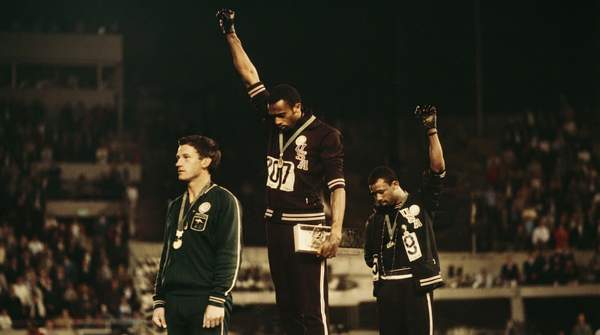
When Tommie Smith and John Carlos raised gloved fists on the Mexico City medal podium in 1968, they were booed by the crowd and summarily dismissed from the Games by the U.S. Olympic Committee. Their protest against racism and the poverty of Black Americans became the most iconic act of athlete dissent in Olympic history — and it followed a pattern that had already played out decades earlier, when Irish long jumper Peter O'Connor scaled a flagpole in 1906 to defy British rule. Across more than sixty years, the story has been remarkably consistent: athletes take political stances, and Olympic powerbrokers move to suppress them.
A Legacy of Dissent: Early Olympic Activism
The first documented act of Olympic athlete activism predates Smith and Carlos by more than half a century. In 1906, Peter O'Connor, Con Leahy, and John Daly were put forward for the Olympics by the Gaelic Athletic Association and the Irish Amateur Athletic Association, according to IrishCentral's account of the episode. The three Irishmen traveled to Greece in green blazers and shamrock-emblazoned caps, carrying an "Erin Go Bragh" flag bearing a golden harp on a green background — national symbols that asserted an Irish identity distinct from the British team they were assigned to.
O'Connor's protest came at the long jump, where he climbed a flagpole and raised the Irish flag. Writing in the Guardian, Sean Ingle notes that Olympic officials were displeased with the act of political dissent but did not expel him: two days later, O'Connor won gold in the hop, step, and jump, repeating his flag-waving protest from the ground. He never competed in another Olympic event after 1906. One caveat matters for the historical record: the 1906 Games were official at the time but are no longer recognized by the IOC as official Olympic Games.
Key Moments of Olympic Athlete Activism
Placing these episodes side by side reveals the recurring dynamic that the political scientist Jules Boykoff describes as a "dialectic of resistance and restriction" — athletes take political stances, and Olympic powerbrokers take action to suppress them. The chronology below sequences the documented instances, showing the year, the athletes, their acts, their stated motivations, and the official consequences that followed.
| Year | Athlete(s) | Act of Protest | Stated Motivation | Official Consequence |
|---|---|---|---|---|
| 1906 | Peter O'Connor | Climbed a flagpole and raised an Irish "Erin Go Bragh" flag; waved it again after winning gold | Protesting British rule over Ireland and asserting Irish national identity | Officials were displeased but did not expel him; he continued to compete and won gold |
| 1968 | Tommie Smith and John Carlos | Raised gloved fists on the medal podium during the American national anthem — the Black Power salute | Protesting racism and the poverty of Black Americans | Booed by the crowd and summarily dismissed from the Games by the U.S. Olympic Committee |
The comparison is instructive. O'Connor's defiance drew displeasure but no expulsion; Smith and Carlos faced immediate removal. What changed was not the impulse to protest but the severity of institutional response — a shift consistent with the heavy resistance that, as an Ohio State account of sports activism notes, activism within sports met during the 1960s and 1970s.