GPS-enabled tail straps, AI-driven gait sensors, and software analyzing bio-mechanical markers are now deployed by top equestrians for a competitive edge. These advanced tools offer granular performance data, allowing riders and coaches to dissect movements and optimize training with unprecedented precision.
The wearable technology market is exploding with sophisticated applications. Yet, its most advanced and surprising transformations emerge in unexpected places like equestrian sports, challenging conventional athletic tech integration.
The future of athletic performance hinges on sophisticated, real-time biometric data, pushing training and competition boundaries. This holds true even as technological limitations persist.
The athlete training wearable market is booming, projected to hit USD 413.67 billion by 2033 from USD 188.67 billion in 2026, a 14.7% CAGR, reports Coherent Market Insights. A 14.7% CAGR signals a fundamental shift: biometric technology is redefining how sports are played, monitored, and analyzed, notes Loyola University Chicago. While "Fitness and Wellness" dominates with a 33.4% market share, true innovation, like AI-driven equestrian sensors, thrives in niche, high-performance domains, not broad consumer wellness, according to The New York Times. This divergence between market volume and cutting-edge application presents a strategic challenge for companies.
Beyond Human: The Rise of Advanced Equestrian Wearables
The drive for a competitive edge pushes technology beyond human-centric metrics, spawning specialized tools for equine athletes. These devices offer granular insights, transforming traditional training.
1. AI-Powered Health & Fitness Coaching
Best for: Athletes seeking personalized training and recovery insights.
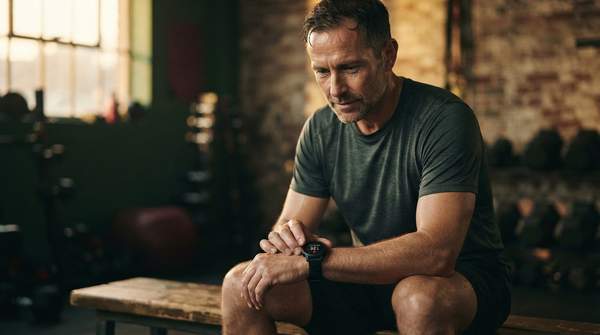
These devices integrate AI to analyze biometric data, delivering tailored health recommendations and fitness coaching. They optimize training and prevent overtraining. Business Research Insights reports 63% of 2024 wearable launches included AI health analytics, boosting user engagement by 37% and preferred by 61% of American consumers. However, data privacy and user input dependency remain concerns. | Price: High-end, varies by brand.
2. Athlete Monitoring Wearables
Best for: Professional teams and athletes focused on performance optimization and injury prevention.
These track diverse physiological metrics, assessing sport-specific biomechanics and workload. They help fine-tune training protocols, improving efficiency by 29%, per Business Research Insights. ScienceDirect confirms their use for biomechanics and workload assessment. Expert data interpretation and setup costs are limitations. | Price: Moderate to high.
3. Wearable Fitness Trackers
Best for: General fitness enthusiasts and recreational athletes monitoring basic health and activity.
Widely adopted, these provide real-time data on pulse, step counts, and sleep. They remain a foundational wellness technology, ranking as a top fitness trend for 2024 and in the top three since 2016, according to ACSM. One in five U.S. adults owns one. Limitations include varied accuracy and lack of sport-specific advanced metrics. | Price: Low to moderate.
4. Equimo Tracker
Best for: Equestrian athletes and trainers focused on detailed horse performance analysis.
This specialized saddle-clipped tracker measures critical equine performance indicators: speed, jumps, elevation, balance, and heart rate, reports The New York Times. Its niche application requires specific mounting. | Price: Moderate.
5. Garmin Blaze Tail Wrap Sensor
Best for: Equestrian athletes and horse owners monitoring health and motion.
Garmin's tail-wrap sensor non-invasively monitors horse health and motion during activities, per The New York Times. Its anatomical placement is specific, and data interpretation demands equestrian expertise. | Price: Moderate.
6. Wearable Sensor Devices (WSDs)
Best for: Researchers, coaches, and athletes requiring precise biomechanical and workload assessment.
WSDs are broad sensors collecting raw data on sport-specific biomechanics and workload in athletic training, forming the basis for advanced analytical systems, states ScienceDirect. Deployment can be complex, often requiring integration with other systems for meaningful analysis. | Price: Varies widely.
Market Dynamics and Persistent Challenges
The wearable technology market exhibits clear adoption and innovation patterns. "Fitness and Wellness" holds the largest market share at 33.4% in 2026, focusing on broad consumer applications, according to Coherent Market Insights. North America leads the overall market with a 37.7% share in 2026, driving early adoption and new tech development. Yet, despite rapid advancements, technical hurdles persist. Temperature sensor designs, for instance, all face distinct limitations, notes PMC. While broad fitness applications fuel market growth, critical innovation gaps remain in specialized sensor technology, demanding targeted R&D.
| Market Segment/Characteristic | 2026 Status | Primary Focus/Impact | Key Challenge/Limitation |
|---|---|---|---|
| Fitness and Wellness | Largest market share (33.4%) | Broad consumer health and activity monitoring | Often lacks hyper-specific athletic optimization beyond basic metrics |
| Geographic Dominance | North America leads (37.7%) | Innovation, early adoption, and market expansion | Requires continuous R&D investment to maintain lead |
| Sensor Technology | Rapidly evolving | Precise data collection for diverse applications | Specific design limitations, such as in temperature sensors |
The Quantifiable Edge: Improved Training and Performance
Athlete monitoring wearables boost training efficiency by 29%, confirms Business Research Insights. This measurable impact forces athletes and coaches beyond subjective assessment. Wearable horse technology and AI are transforming equestrian sports, reports The New York Times. Niche sports, once intuition-driven, now embrace advanced analytics. This quantifiable improvement and ongoing revolution underscore the undeniable value of these technologies.
By Q3 2026, companies like Equimo and Garmin, by focusing on niche, data-rich solutions for specific sports, appear positioned to capture further market share from those offering only general fitness devices.
Common Questions About Wearable Tech for Athletes
What are the top wearable devices for runners in 2026?
For runners in 2026, devices that offer advanced GPS tracking, real-time pace and distance metrics, and recovery insights are paramount. While specific models vary, the focus is on comprehensive data collection that goes beyond basic step counts to include stride length, ground contact time, and vertical oscillation, providing a deeper understanding of running biomechanics.
How do wearables improve athletic performance?
Wearables improve athletic performance by providing objective, real-time biometric data. This data, which can include pulse, step counts, and sleep patterns, allows athletes and coaches to make data-driven decisions on training loads, recovery protocols, and injury prevention. The granular insights help tailor training programs more precisely than traditional methods, leading to more efficient progress and reduced risk of overtraining.
Are GPS watches worth it for training in 2026?
GPS watches remain a valuable investment for training in 2026, particularly for outdoor athletes. They provide precise tracking of distance, pace, and route, which is essential for structured training and race preparation. Beyond basic navigation, advanced GPS watches now integrate with other sensors to offer comprehensive performance metrics, making them indispensable for optimizing outdoor athletic endeavors.