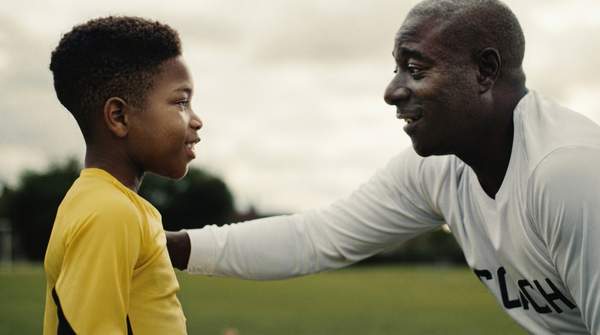
Early sports specialization — intense, year-round training in a single sport, often to the exclusion of all others — is associated with elevated risks of burnout, anxiety, decreased enjoyment and lower self-esteem in young athletes. But the association is not destiny. Research on specialized youth athletes indicates that when training and competition environments are fun, intentionally teach life skills, and offer a motivational climate that supports the athlete's needs, resilience improves and mental health is better protected, even during periods of high stress. The decisive variable, in other words, is less whether a child specializes than how the surrounding environment is built.
Understanding Early Sports Specialization: Risks and Rewards
Specialization is typically defined as a young athlete choosing to focus participation on one sport, possibly to the exclusion of all others, resulting in year-round participation and high-intensity training. The behavior is usually driven by a familiar logic: coaches and parents press for early commitment in the belief that a head start is required for elite success.
The evidence complicates that logic. A review of the literature on specialization and pediatric athletes, published in the peer-reviewed Current Sports Medicine Reports literature hosted by the National Library of Medicine, surveyed the available research linking specialization to mental health, sleep, the drive for success and burnout. Its findings — alongside a rapid review authored by sports scientist Joe Eisenmann — consistently associate early specialization with worse psychological outcomes in many, though not all, studies. The American Orthopaedic Society for Sports Medicine similarly lists higher burnout and early retirement among the drawbacks, noting that external pressure from coaches and parents can hinder long-term engagement. These are reported associations rather than proven causal chains; longitudinal evidence directly connecting early specialization to specific long-term psychological outcomes remains limited, a caveat that the health-consequences literature itself acknowledges.
The Psychological Pathways to Burnout and Anxiety
How does a nine-year-old who loves a game become a teenager who dreads it? The mechanism most often described is a slow squeeze on identity and enjoyment. Intense, single-sport training can lead to social isolation, which in turn impedes the normal formation of an athlete's identity — a psychosocial effect identified in the sports-medicine literature on youth specialization. When a child's entire social world and self-concept collapse into one activity, every result becomes a referendum on who they are.
Layered on top are personal and environmental stressors. Perfectionistic traits were found to be the best predictor of psychological distress in the population studied in the psychosocial review, and perfectionism is examined there as a direct contributor to burnout. External factors compound the internal ones: unrealistic expectations set by parents and coaches generate excessive psychological stress. The National Federation of State High School Associations frames the resulting risk profile starkly — young athletes who specialize early are placed at risk for burnout, injury, decreased mood, anxiety, less enjoyment and lower self-esteem.
It is worth noting the review's caution that data suggesting elite participation was consistent with improved mental health relative to the general population came from European adolescents, raising questions about applicability to young American athletes. Concerns remained "fairly common" even among high-level athletes. The picture is one of elevated and interacting risks, not a guaranteed outcome.
Fostering Resilience: Protective Factors in Youth Sports
The same literature that documents the risks also identifies what blunts them. According to the psychosocial review, positive mental health outcomes are enhanced in specialized athletes when three conditions hold: training and competition environments are fun, life skills are taught intentionally, and the motivational climate supports the athlete's needs. This combination, the review reports, improves resilience and mental toughness, which has been shown to protect mental health during periods of high stress in elite young athletes.
Each condition addresses a specific risk pathway. Fun directly counters the erosion of enjoyment that precedes burnout. A needs-supportive climate counters the perfectionism-and-pressure spiral by shifting the evaluative focus away from outcomes alone. Deliberate life-skills teaching widens identity beyond athletic performance, addressing the narrowed self-concept that isolation produces. The review adds a warning on the other side of the ledger: abusive environments compromise mental health, and specialized athletes are often in situations that place them at higher risk for abuse — a function of the concentrated power a single coach acquires over a year-round athlete.
Explanatory Model: Psychological Trajectories in Youth Sports Specialization
Use this framework to evaluate a young athlete's training environment. Items in the left column push the athlete toward distress; items on the right build resilience. A child's trajectory is not fixed by specializing — it is shaped by which column their daily environment resembles more closely.
| Risk factors (toward burnout and anxiety) | Protective factors (toward resilience) |
|---|---|
| Intense, year-round single-sport training contributing to burnout and decreased enjoyment | Training and competition environments that are fun |
| Perfectionistic traits — identified as the best predictor of psychological distress in the studied population | Motivational climate that supports the athlete's needs |
| Social isolation that impedes normal identity formation | Intentional teaching of life skills that widens identity beyond sport |
| Unrealistic expectations and pressure from parents and coaches; abusive environments | Coaches and sport stakeholders actively recognizing and building resilience and mental toughness |
The reasoning path is direct: each risk factor on the left was identified in the research literature as a contributor to distress, and each protective factor on the right was identified as countering the conditions under which distress develops. Perfectionism meets a needs-supportive climate; isolation meets broadened identity; pressure meets fun. Specialized athletes whose environment supplies the right column's factors have shown resilience that protects mental health even under high stress.
Beyond Specialization: The Case for Multi-Sport Participation
The strongest counterargument to early specialization is that it does not even deliver what it promises. The high school federation reports that evidence suggests specializing before ages 13–15 does not appear to increase the likelihood of future athletic success — and that the opposite may in fact be true. Multi-sport athletes, within reason, develop physical, tactical, social and psychological skills across different environments, exposing them to diverse experiences that a single sport at an early age cannot provide on its own.
Eisenmann's rapid review reaches a compatible conclusion, finding mixed — "definitely not definitive" — evidence for any later-success advantage among early specializers. The sports medicine literature recommends encouraging diversification in youth sports to foster comprehensive motor development, since varied participation builds the well-rounded motor skills that matter for long-term athletic success. There is no single evidence-backed "best age" to specialize; the timing question is sport-specific. But the burden of proof now sits with those who argue that narrowing a child's athletic life early is the surer route to elite achievement.
Protecting Youth Athletes: Fostering Resilience Through Balanced Development
The decision for parents and coaches is to prioritize a balanced approach to youth sports that emphasizes a supportive environment, fun, and diverse skill development over early, intense specialization to safeguard psychological well-being. The evidence does not demand abandoning a single-sport pathway; it demands that any such pathway be built around the protective factors — fun, life skills and a needs-supportive climate — and ideally after a childhood that included sampling other sports.
The measurable indicator to watch: a sustained increase in the athlete's reported enjoyment, engagement, and perceived support from coaches and peers, alongside a reduction in signs of stress or withdrawal. Enjoyment is not decorative in this literature — it is the leading edge of the risk model, the first thing to erode before burnout takes hold, and the clearest everyday signal of whether a young athlete's environment is building them up or wearing them down.
Sources
- The Psychosocial Implications of Sport Specialization in Pediatric Athletes - PMC
- Health Consequences of Youth Sport Specialization - PMC
- A Rapid Review of Research on Early Sports Specialization: An Audio Overview — Joeeisenmann
- Early Sport Specialization — AOSSM
- Sport Specialization and Youth Athletes: Considering Mental Health, Well-Being — NFHS