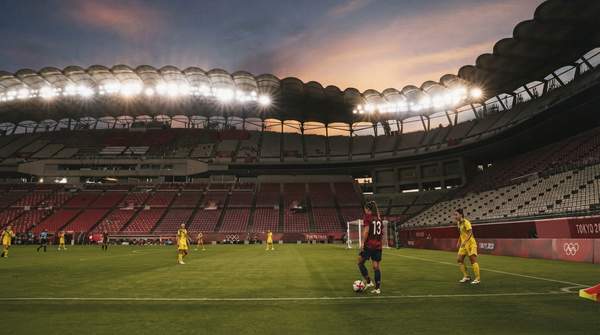
The home-field advantage is one of the most consistent phenomena in sports, a statistical reality where teams simply win more often in their own venues. While the roar of a supportive crowd is the most common explanation, a closer look at the data reveals a more complex picture. The advantage persists even in empty stadiums, suggesting that factors like travel fatigue for visiting teams, environmental familiarity for home teams, and even the subtle influence of fans on referees play significant, and perhaps greater, roles.
The Undeniable Reality of Home-Field Advantage
Across nearly every major professional sport, playing at home provides a measurable edge. The advantage is not uniform, but the pattern is clear. According to an analysis published by the University of Chicago Booth School of Business, soccer sees the largest effect, with home teams in US Major League Soccer winning a staggering 69.1% of their games. The advantage is also pronounced in other indoor and outdoor sports.
In the NBA, home teams win 62.7% of the time, while international cricket teams secure victory in 60.1% of home matches. The trend continues in the NHL, where home teams win 59% of games, and in rugby, with a 58% home win rate. American football sees a 57.6% win rate for the home team. Even in baseball, which has the smallest advantage among major American sports, home teams in Major League Baseball still win 54.1% of their games, with a similar 53.3% rate in Japan’s Nippon League.
Comparing Theories of Home-Field Advantage
While the existence of home-field advantage is clear, its causes are debated. Researchers have explored several competing theories, each with supporting and conflicting evidence. The common assumption that crowd noise is the primary driver is challenged by data from games played without fans, pointing to a more complex interplay of factors.
| Theory | Proposed Mechanism | Supporting and Counter-Evidence |
|---|---|---|
| Crowd Influence | The home crowd energizes its own team and intimidates the visiting team and its players. This is often considered the most intuitive explanation for the advantage. | Counter: The home-field advantage persisted during the COVID-19 pandemic when games were played in empty stadiums. While the win percentage dipped slightly, it did not disappear, suggesting the crowd is not the sole or primary cause. |
| Travel and Familiarity | Visiting teams are disadvantaged by travel fatigue, time-zone adjustments, and sleeping in unfamiliar surroundings. Home teams benefit from their normal routines and deep familiarity with their environment. | Supporting: A significant portion of the home-field advantage remained even without fans, suggesting these environmental and physiological factors play a large role. Counter: The advantage still exists when teams play "away" in their own city (e.g., Lakers vs. Clippers), indicating that familiarity with the specific venue is a key factor beyond just avoiding travel. |
| Referee Bias | Social pressure and noise from a large, partisan crowd can subconsciously influence the decisions of referees, leading them to favor the home team in subjective calls. | Supporting: Research on German first-division football matches found that in games with high attendance and loud fans, referees' decisions were more likely to favor the home team, correlating with a higher win rate. |