The knuckleball moves erratically because it barely rotates. A baseball thrown with almost no spin presents its raised seams to the oncoming air in constantly shifting orientations, and those seams break the symmetry of the airflow around the ball. The result is what aerodynamics researchers call unsteady lift forces—side forces that keep changing in magnitude and direction during flight—and a trajectory that experimental and modeling work describes as genuinely chaotic. Understanding why requires following one cause-and-effect chain: from the pitcher's release, through the seams' disruption of the air, to the zig-zag path that frustrates hitters and catchers alike.
The Knuckleball's Enigma: A Dance of Aerodynamics
Zigzag paths in sports are exceptional events, reported in baseball, volleyball, and soccer, and a 2016 study in the New Journal of Physics by Baptiste Darbois Texier, Caroline Cohen, David Quéré, and Christophe Clanet links them to intermittent breaking of lateral symmetry in the surrounding flow. The knuckleball is baseball's signature example. Unlike a curveball, whose rapid, consistent spin produces a steady, predictable deflection, the knuckleball's movement appears to have no pattern at all: it can break in one direction, then another, within a single flight to the plate.
That apparent randomness is not a trick of perception. A 2021 physics model by Nelson and Strauss, built on experimental measurements of slowly rotating baseballs, provides what its summary calls strong evidence that knuckleballs are in fact chaotic, and that this chaotic uncertainty is likely a significant factor in the pitch's unpredictability. The ball's path is not merely hard to observe in real time; it is intrinsically difficult to forecast, even in principle, beyond a certain horizon.
The Pitcher's Art: Minimizing Spin
Everything begins at release. The pitcher's goal is to strip the ball of rotation, because the pitch's movement depends on the seam configurations exposed to the airflow changing slowly as the ball flies. An engineering explainer from USC's Illumin Magazine notes the paradox at the heart of the technique: a complete lack of rotation would produce no change in airflow and therefore no movement. The ideal knuckleball rotates just enough—slowly presenting new seam orientations to the air—to keep the aerodynamic forces changing.
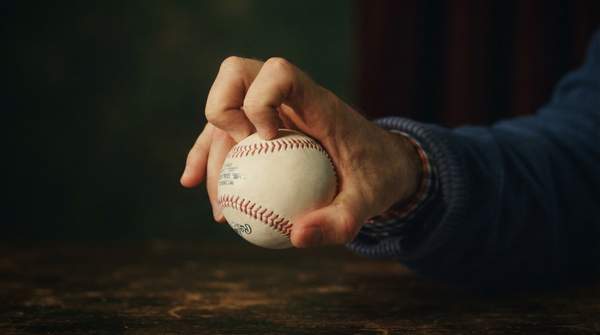
The mechanics serve that goal. The grip described in the USC piece has the pitcher clenching the ball just below the seams with the tips of the middle, index, and ring fingers, digging the fingernails into the leather, with the thumb underneath for support. Training material from Driveline Baseball adds that the wrist stays stiff until the ball has completely left the hand, so the ball feels as if it slips or "shoots" out of the palm rather than being pushed by the fingers. The pitch is thrown roughly 10 to 20 mph slower than a fastball, and the precision required makes it, in the words of one experimental investigation, one of the hardest pitches to throw, hit, catch, and umpire.
Aerodynamic Principles: The Role of Seams and Airflow
A baseball is not a smooth sphere. Its 108 raised stitches form a seam that protrudes above the leather, and that irregularity is the engine of the knuckleball's behavior. When a ball spins rapidly, as with a fastball or curveball, the seam pattern blurs into a statistically uniform surface, and the airflow treats the ball consistently from moment to moment. When the ball rotates very slowly, the seam lingers in each orientation, and the air responds to each configuration differently.
Experimental work by Michael Patrick Morrissey at Marquette University, an investigation into the effects of the seam and slow rotation on a baseball, establishes the contrast directly: the knuckleball differs from other pitches in its much slower rotation rate and its different initial orientation, and this combination causes the baseball to "knuckle"—to move erratically. The seam acts as a tripwire for the airflow. Depending on where it sits relative to the oncoming air, the flow separates from the ball's surface asymmetrically, with the smooth leather and the stitched region shedding air differently on different sides.
Unsteady Lift and Chaotic Trajectory
Asymmetric flow separation produces lift—and here lies the knuckleball's defining feature. On a spinning pitch, lift is roughly steady: the ball curves one way, consistently. On a knuckleball, the lift is unsteady. As the slow rotation carries the seam into new orientations, the points where the airflow separates shift, and the resulting lateral force changes both its size and its direction, sometimes reversing entirely during the ball's flight.
The 2016 New Journal of Physics study, after comparing the seam-based scenarios in the literature against existing data, performed its own experiments on zigzag trajectories and proposed an explanation grounded in these unsteady lift forces. Driveline's training material echoes the researchers' language: because of its low spin rate and the aerodynamic phenomenon of "unsteady lift forces"—likely created by the seams—the ball will "dance" or "zig-zag" as it travels toward the plate. Each small change in force nudges the ball onto a slightly new path, and those nudges compound into the pitch's signature wander.
The Knuckleball's Aerodynamic Journey: A Step-by-Step Model
The full mechanism can be traced as a chronological chain, from release to plate. Each stage below follows from the previous one, and the table shows how a slow, simple throw becomes an unpredictable flight.
| Stage | What happens | Physical consequence |
|---|---|---|
| 1. Release | Fingernail grip and a stiff wrist, with the ball "shooting" from the fingertips, minimize rotation. | The ball leaves the hand with a spin rate far below that of other pitches. |
| 2. Seam orientation | Because rotation is minimal, the seam's position relative to the airflow changes only slowly. | Each seam configuration is held up to the air long enough to matter. |
| 3. Airflow disruption | The protruding seam and smooth leather shed air differently, breaking the flow's lateral symmetry. | Flow separation becomes asymmetric and shifts as the seam's orientation shifts. |
| 4. Unsteady lift | Asymmetric separation generates lateral forces that change in magnitude and direction. | Unlike a spinning pitch's steady curve, the force can grow, shrink, or reverse mid-flight. |
| 5. Chaotic trajectory | Compounding force changes deflect the ball onto a zig-zag path. | The ball "dances" unpredictably, defying both hitters' expectations and simple prediction models. |
Read down the table and the logic is cumulative: no minimal spin, no slowly shifting seam orientation; no shifting seam, no asymmetric separation; no asymmetric separation, no unsteady lift; no unsteady lift, no dance. The pitch's unpredictability is not an add-on to its slowness—it is what slowness produces.
Mastering the Unpredictable: Implications for Pitchers and Hitters
Pitchers must focus on minimizing spin to harness the chaotic aerodynamic forces, while hitters must contend with a trajectory that defies conventional prediction models. The evidence converges on one conclusion: the knuckleball's unpredictable movement is a direct consequence of minimal spin interacting with the seam to generate unsteady, asymmetric aerodynamic forces—a link drawn consistently by the experimental investigations and models cited here. This article explains those principles; it is not a practical throwing guide, and the physics has been kept conceptual rather than mathematical.
The observable signal of a well-thrown knuckleball is the degree of lateral and vertical movement that deviates from a smooth, predictable arc, indicating effective unsteady lift generation. When a pitch thrown 10 to 20 mph slower than a fastball still produces swings, misses, and soft contact, that deviation is the measurable signature of the aerodynamics at work.
Sources
- Knuckleball Research — Baseball
- Curveballs and Knuckleballs — Illumin Magazine - USC Viterbi School of Engineering – Illumin Magazine - USC Viterbi School of Engineering
- How to Throw a Knuckleball — Driveline Baseball
- The Aerodynamics of the Knuckleball Pitch — e-Publications@Marquette
- Semanticscholar