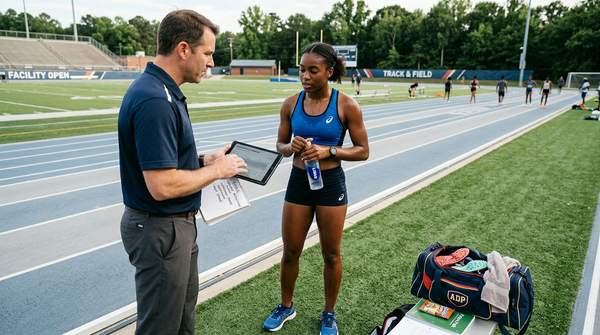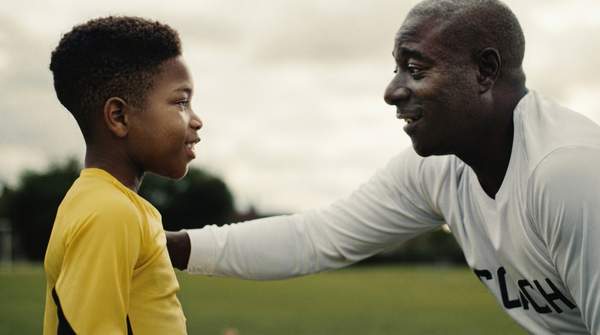
Sports psychology began as a narrow craft: helping individual athletes clear mental obstructions so they could perform better. Today, the field has expanded into a holistic discipline that treats the athlete as a whole person, shaped by family, peers, culture, and the wider social systems around them. Understanding that shift explains not just what sports psychologists do now, but why the old "mental skills coach" label no longer captures the job.
The Genesis of Sports Psychology: Early Focus on Performance
Traditionally, sport psychology was treated as synonymous with performance enhancement. As the Performance Institute has described, the practitioner's role was to help individual athletes perform by overcoming mental obstructions — a framing that tied the athlete's identity almost entirely to their competitive role. The mental state mattered insofar as it moved the scoreboard.
Within that model, the toolkit was correspondingly narrow. Interventions centered on mental skills training aimed directly at performance improvement: the practitioner's goal was competitive success, and the athlete was viewed primarily as a performer whose psychology was relevant only in relation to outcomes. This was a defensible starting point, but it left large parts of the athlete's life — and much of what actually influences performance — outside the frame.
Expanding Horizons: Integrating Cognitive and Social Dimensions
The first major widening came from recognizing that athletes do not compete in a vacuum. As the Performance Institute notes, individuals in sport are impacted and influenced by all that goes on in society, in addition to the unique elements of their sport environments. That realization pushed the field beyond the mental-skills-coach conception toward ecological models that examine how environment and wider social systems affect the athlete, citing work by Henriksen, Stambulova, and Roessler from 2010.
Cognitive science and social psychology deepened this expansion. A review published in the journal Sporting Mind emphasizes that athletes' mental processes, behaviors, and emotional and social experiences are influenced by motivation, goal setting, stress management, and team dynamics — and that these facets are embedded in cultural values and expectations that shape how athletes experience everything from competition to victory and defeat. Culture, in other words, is not background noise; it actively molds psychological states and reactions.
The Holistic Paradigm: Athlete Well-being at the Core
The contemporary shift is best understood as a change in the unit of care. Given the rising need to focus on athlete wellbeing, applied sport psychology has gone beyond the performance narrative, as the Performance Institute puts it — though the same article candidly observes that "holistic" is often mentioned with little explanation of what it means.
Viewed through an ecological framework, the holistic approach holds that coaching staff, family systems, peers, the sport organisation, educational environment, media, culture, and social systems all influence how the athlete thrives. The practitioner's goal correspondingly broadens: rather than only removing barriers to performance, the modern aim is to help athletes achieve high functioning, broaden engagement, enhance learning, grow as a person, and improve overall well-being. The Sporting Mind review advocates precisely this holistic approach to mental well-being, emphasizing sport's role in emotional regulation, resilience, and cognitive function.
Key Components of Modern Holistic Sports Psychology
What does the holistic model look like in practice? UK Coaching's sport psychology guide identifies the pillars as holistic development, developing emotional regulation, brain development, and performance skills — a list that keeps performance in view but no longer treats it as the sole destination.
Emotional regulation is a foundational component. UK Coaching frames emotional changes as natural responses hard-wired into the body's awareness of potential threats, meaning regulation is a learnable skill rather than a fixed trait. Mindfulness-based techniques build on this: the Sporting Mind review describes how self-regulation, self-awareness, and acceptance developed through mindfulness practice give athletes tools that improve both performance and well-being, making it part of personal and professional development within sport.
Social dynamics form the third pillar. Humans have a fundamental social nature, and the psychological impacts of teamwork and camaraderie are treated as core material, not optional extras. UK Coaching's practical guidance reflects this: foster a culture of peer support across ages and stages, create formal and informal role model interactions, and treat internal and external competition as development tools whose "why" must always be justified. The approach is proactive — building supportive environments before problems arise, rather than only reacting when performance dips.
Traditional vs. Holistic: A Comparative View
The clearest way to grasp the paradigm shift is to place the two models side by side across the dimensions that define the practitioner's work.
| Dimension | Traditional Model | Holistic Model |
|---|---|---|
| Primary Focus | Performance enhancement and overcoming mental obstructions in individual athletes | Athlete well-being, emotional regulation, cognitive performance, and broader life context, including mental health and personal growth beyond sport |
| Key Interventions | Mental skills training aimed at direct performance improvement | Emotional regulation, self-awareness through mindfulness, proactive coaching, and support for social dynamics and peer cultures |
| View of the Athlete | A performer whose mental state matters insofar as it affects competitive outcomes | A whole person influenced by sport environment, family, peers, culture, and society, with emphasis on learning and growth |
| Practitioner's Goal | Help the athlete perform better by addressing mental barriers, with success tied to competitive results | Help the athlete achieve high functioning, broaden engagement, enhance learning, grow as a person, and improve overall well-being |
Read across the rows, the table shows that the holistic model does not abandon performance — it repositions it as one outcome among several, sustained by well-being rather than pursued at its expense. This article is not a clinical guide and does not offer therapeutic advice; it maps the profession's scope, not a treatment protocol.
Embracing the Holistic Advantage in Athlete Development
The evolution of sports psychology reflects a broader recognition that an athlete's performance is intrinsically linked to their overall mental health, emotional well-being, and social environment — a synthesis of the historical and contemporary accounts above. Athletes and support staff should recognize and actively seek out sports psychology services that adopt a holistic model, integrating mental skills with emotional well-being and broader life context. The measurable indicator to watch is increased athlete engagement in well-being programs and improved reported satisfaction with comprehensive psychological support — outcomes the evidence links to the proactive, whole-person approach the field has spent decades building.